 robdiddy
Kerby Joseph #31 of the Detroit Lions carries the ball after his interception against the San Francisco 49ers during the third quarter at Levi's Stadium on December 30, 2024 in Santa Clara, California. (Photo by Ezra Shaw/Getty Images)
Detroit Lions star posts picture of knee on social media. Fans are very concerned
The First Team All-Pro safety first suffered his knee injury during training camp.
A Detroit Lions star has caused an uproar from fans after he posted a picture of his knee on his social media.
On Tuesday, Feb. 17, star safety Kerby Joseph shared several posts on his Instagram story, including one showing his knee during acupuncture treatment with 17 needles visible. The treatment itself did not raise concerns, but fans reacted to the photo showing Joseph’s knee, which appeared swollen.
Originally written by- ClickOnDetroit.com
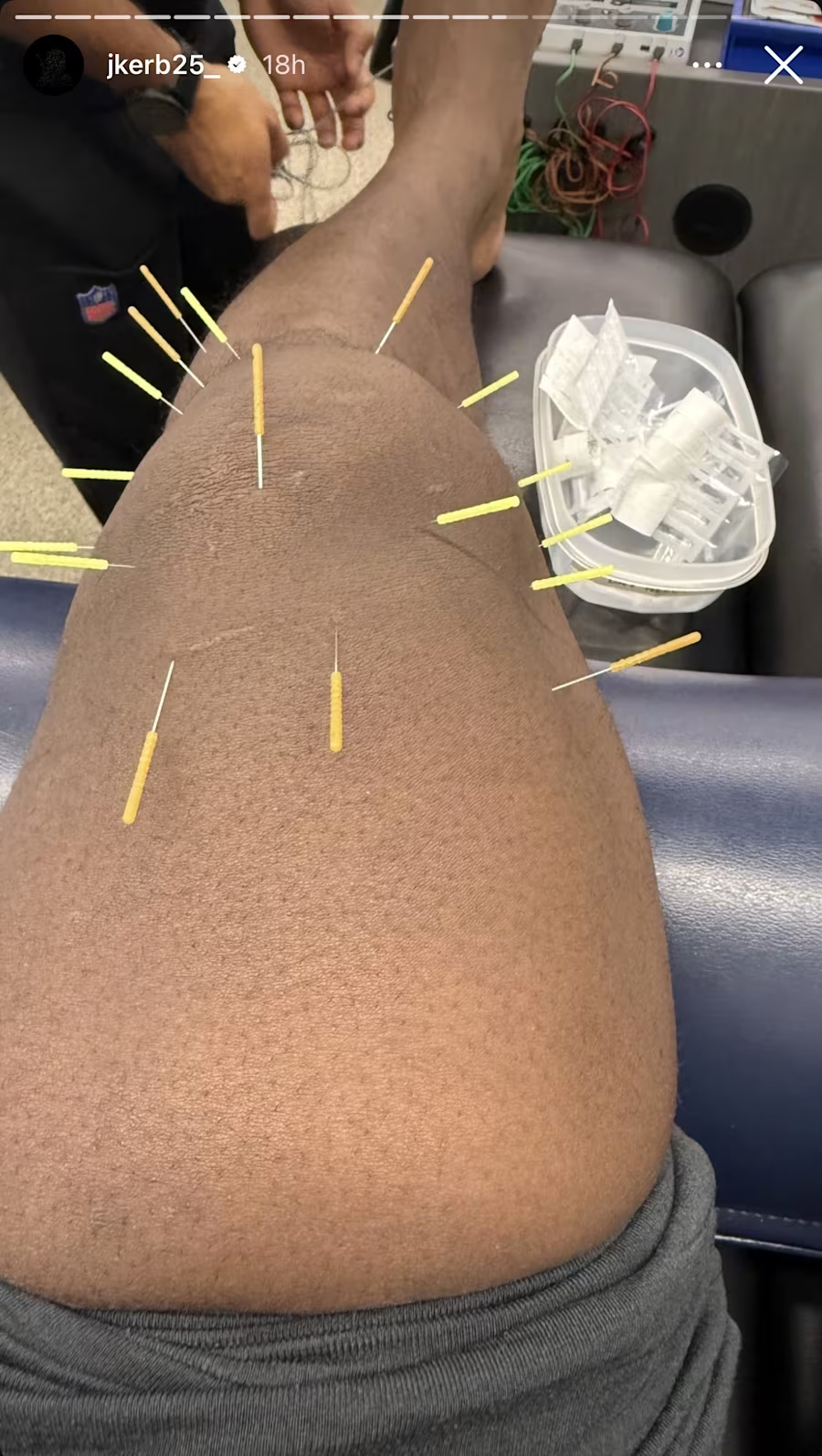
This Procedure is called Dry Needling a procedure I myself have had done in the past. This is the Physical Therapist Office That I went to in Novi, Michigan.
oseph was placed on injured reserve Dec. 20, 2025, due to a lingering left knee injury, specifically a bone bruise, which sidelined him since Week 6 of the 2025 season.
he First Team All-Pro safety first suffered his knee injury during training camp.
It resurfaced in Week 4 against the Cleveland Browns and worsened as he continued to play.
Before the injury, Joseph had recorded three interceptions in the first six games of the season.
There’s no evidence of Joseph suffering a new injury, so the alleged swelling could be from treatment.
What Is Dry Needling?
“Physical therapy and dry needling is unbelievable! ” The dry needling was especially effective—relieving muscle tension and improving mobility faster than I expected. Basically it helps muscles and nerves to release tension and stuck muscle contractions. Which can reduce muscle or nerve pain throughout a patients body.
Dry needling is a therapeutic technique used by trained physical therapists and healthcare providers to treat musculoskeletal pain and movement impairments by inserting thin, sterile needles into myofascial trigger points (“knots”). It aims to reduce muscle tightness, increase blood flow, and alleviate pain, with results often lasting long-term when combined with rehabilitation exercises.
Dry Needling vs. Acupuncture
Although both use similar thin needles, they are different in theory. Dry needling targets specific muscle trigger points for neuromuscular dysfunction based on Western medicine, whereas acupuncture focuses on balancing energy flow (Qi) along meridians.
Key Aspects of Dry Needling:
Benefits: The primary benefits include reduced pain, improved range of motion, increased flexibility, and faster recovery from injury.
Conditions Treated: It is effective for chronic pain, tension headaches, whiplash, sciatica, rotator cuff pain, tennis elbow, and TMJ.
Procedure & Sensations: Thin, filiform needles (not used to inject medication) are inserted into the skin, sometimes causing a “twitch response,” which is a brief, cramp-like sensation that indicates the muscle is releasing.
Side Effects: While generally safe, potential side effects include temporary soreness, bruising, or bleeding at the site of insertion.
Effect Duration: Results can be immediate for some, with long-term effects often depending on combining the treatment with corrective exercise.
Cost: While specific costs vary, it is generally considered a specialized physical therapy service often covered by insurance if deemed medically necessary.
About the Author


